Biogents Webshop For Researchers

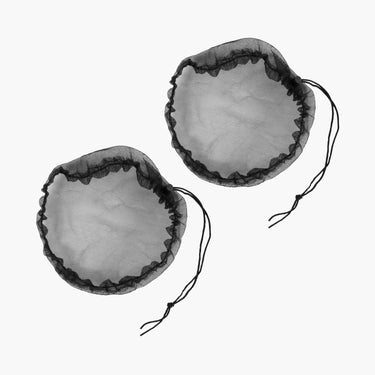
BG-GAT Barrier Net, Set of 2

5,63 € 4,22 € Sale
Description

2x Barrier net with elastic band for the BG-GAT2 trap (it is attached to the transparent chamber to hinder mosquitoes from actually reaching the water to lay their eggs)

Downloads

For shipping costs and payment conditions, please refer to our Shipping and Payment Conditions page.

Need Help?

If you have any questions about our products, please contact us.

Contact Us

Frequently Asked Questions

What is the BG-GAT designed to collect?

The BG-GAT (Gravid Aedes Trap) is a passive trap designed to attract gravid female Aedes mosquitoes searching for an oviposition site.

It imitates a potential breeding site using visual and water-related cues.

Female mosquitoes enter the trap through the funnel and move into a transparent collection chamber. The chamber is designed to make escape difficult, while the black mesh barrier separates the mosquitoes from the water inside the trap.

The BG-GAT is particularly relevant for surveillance of:

  • Aedes aegypti
  • Aedes albopictus

It can also be used as part of integrated mosquito control programs.

Does the BG-GAT require electricity or CO₂?

No. The BG-GAT is a passive trap and does not require electricity or CO₂.

Its passive design makes it particularly suitable for large-scale deployments, field locations with limited infrastructure and surveillance programs requiring multiple sampling locations.

The trap uses visual and oviposition-related cues rather than an electrically powered fan or artificial host-seeking attractant.

Do I need to add organic material to the water inside the BG-GAT?

The BG-GAT uses water and oviposition-related cues to attract gravid female Aedes mosquitoes.

Adding organic material to the water can increase catch rates under certain conditions. However, the exact effect may depend on the target species, local environment, and experimental setup.

For comparative studies, the water composition should be standardized across all traps.

If organic material is used, document the type, quantity, preparation method, and replacement interval. Avoid changing the infusion composition during a study unless the change is part of the experimental design.

Note that adding organic material might increase the catch of Culex mosquitoes and thus make the GAT less Aedes-specific.

Where should I place the BG-GAT?

The BG-GAT should be placed in a location where it is visible to approaching mosquitoes, but protected from direct rainfall.

The black color of the trap helps attract mosquitoes, so the trap should not be entirely hidden in dense vegetation or bushes. Make sure to place it inside vegetation in a way that it is at least partially visible.

Test different locations where possible and document the selected placement throughout the study.

Please also note that new plastic components may initially release odors that can affect mosquito behavior. Biogents recommends allowing the trap to air outdoors, optionally with water inside, before field deployment.

Can I use the BG-GAT together with the BG-Pro, BG-Sentinel, or BG-Protector?

Yes. The BG-GAT and active suction traps can complement each other in integrated mosquito surveillance programs.

The BG-GAT primarily targets gravid container-breeding Aedes females searching for an oviposition site.

The BG-Pro, BG-Sentinel, and BG-Protector primarily collect host-seeking mosquitoes attracted by visual, olfactory, and airflow-related cues. These active suction traps have much higher catch rates than the GAT. The GAT, on the other hand, is highly specific and sensitive for Aedes aegypti and Aedes albopictus, making it ideal for monitoring these species.

Combining these trap types can provide information about different behavioral and physiological groups within the local mosquito population.

Is the BG-GAT as effective as the BG-Sentinel?

The BG-GAT and BG-Sentinel are designed for different monitoring objectives and should not be considered interchangeable.

The typical sampling period of a BG suction trap is 24 h, while the typical sampling period of a BG-GAT is one to two weeks.

In a field study comparing the two traps for Aedes albopictus, the BG-Sentinel collected higher numbers of mosquitoes during its 24-hour sampling periods, while the BG-GAT was operated over longer sampling intervals.

Despite differences in the number of mosquitoes collected, both traps detected female Aedes albopictus at similar proportions of positive traps in the reported field comparisons.

The authors concluded that the traps can complement each other, because they collect different behavioral and physiological groups.

Reference: Johnson et al. (2017), Journal of Medical Entomology, 54(2), 340–348. DOI

Do I need to add Bti to the BG-GAT?

Bti may be added if required by the local protocol, but it is not always necessary. The barrier net is intended to prevent emerging adults from escaping. In some monitoring approaches, larval development and associated odors are deliberately retained, because they can attract additional gravid mosquitoes. Follow local regulations and the approved study or control protocol.

Why is one BG-GAT collecting green bottle flies?

An individual trap may be affected by its position, contaminated by odors, or contain overly organic or foul water. Swap the positions of the two traps to separate a location effect from a trap effect. Clean the affected trap and barrier net thoroughly with hot water and soap; where compatible with the material and protocol, an ethanol rinse may also be used. Avoid adding excess organic material to the water.